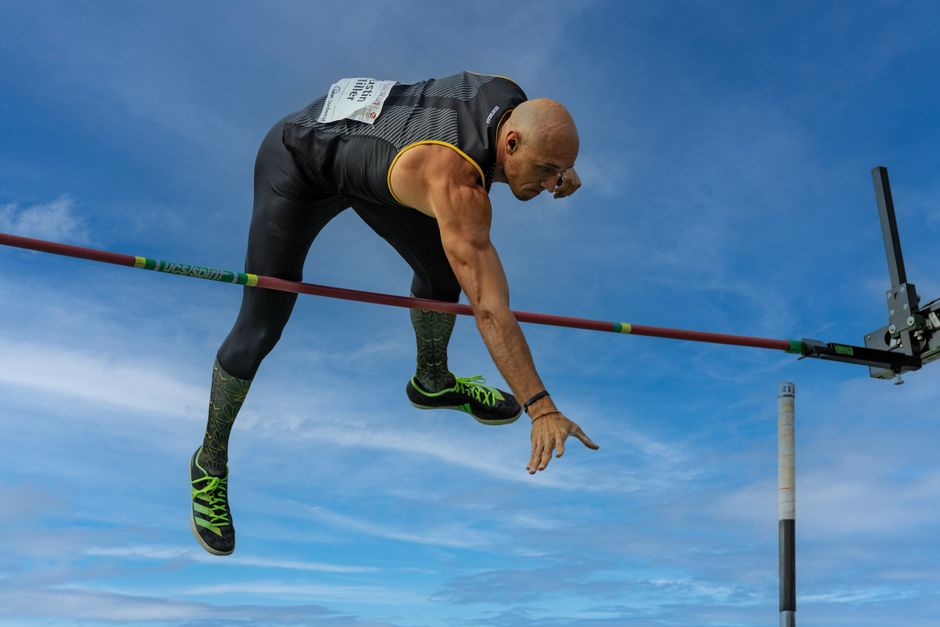
Let’s be real — everyone who picks up a pole wants to jump higher. Whether you’re a freshman just figuring out how to hold the thing, or a returning athlete stuck at the same height for two seasons, the answer usually isn’t more jump days. It’s what you’re doing between jumps.
D1 pole vaulter Karlie Place put it perfectly in her guide for young vaulters: “The faster you are on the runway the higher you will jump.” That one sentence unlocks a lot. Pole vault isn’t just a jumping event — it’s a speed event, a strength event, and a skill event all rolled into one. So if you want to break through your PR, here are four things worth your serious attention.
1. Fix Your Sprint Form (Yes, Even If You’re Already Fast)
This one might sting a little, but it needs to be said: most vaulters don’t work on their sprint form nearly enough. They spend hours on the runway with a pole but skip the thing that drives the whole event — running mechanics.
Here’s a simple drill: film yourself doing a straight sprint with no pole, then pull up a good sprinting form video and compare. Do this without the pole so you can actually focus on your body position — arms, posture, knee drive, all of it. Once you start seeing real improvement in your sprint, then take it to the runway and see how it translates.
The approach run isn’t just about getting to the box fast. It’s about getting there with good posture, good rhythm, and controlled aggression. The more speed you bring into the plant, the more the pole has to work with — and that means more height.
2. Get in the Weight Room (For Real This Time)
Pole vault is one of those events where athletes convince themselves they don’t need to lift. Don’t be that athlete.
Karlie Place is blunt about it in her coaching guide: lift heavy in the offseason and build real muscle. She also admits she avoided the weight room early in her career — felt out of place, wasn’t seeing results, didn’t really get why it mattered. She went on to become a D1 All-American.
The offseason is the time to build your base. Get strong. Put on muscle. Don’t be afraid to ask your coach or a trainer how to do it correctly. During the season, your coaches will dial in the in-season lifting plan — trust that process. But if you show up to preseason already strong, you’ll be way ahead of where you were last year.
Not sure where to start? TikTok and YouTube are genuinely solid resources for learning basic lifting technique. Everyone starts somewhere.
3. Train Your Core Like It’s Your Job
If sprint form and lifting are the foundation, core strength is what lets you actually use both of them in the air. The inversion — getting your feet above your head as the pole bends and recoils — takes serious core control.
As Karlie puts it: “Getting upside down in your vault is a lot easier with the core strength to do so.”
This isn’t just crunches. Pole vaulters need rotational strength, anti-rotation stability, and the ability to brace and move at the same time. After jumping sessions is a great time to throw in core work while your muscles are already firing. Look up pole vault-specific core exercises — there are plenty of videos showing the exact movements vaulters use to build the strength to invert efficiently.
4. Add These Two Drills to Your Practice
Technique improves when you isolate the parts that are hardest. Here are two drills — both sourced from Karlie Place’s coaching guide — that directly target the plant and takeoff:
The Partner Plant Drill
Karlie credits this single drill with taking her from 11’6” to 13’2” in one year. That’s not a typo.
What you need: A pole above your weight class, and a coach or partner.
How it works:
- Stand facing the box with your top arm up and the pole tip snug in the box
- Take 3 steps back and mark that spot on the track
- Start with the pole tip on the ground, top arm bent, fist near your shoulder
- Count down 3-2-1 with your coach behind you, hands on your back to stabilize
- Take your 3 steps toward the box and punch up as hard as you can with your top hand when you jump
That punching motion is the whole point. Karlie says she thinks about it on every single full jump she takes: PUNCH THE SKY. Burn that into your brain.
Safety note: Use a pole above your weight class for this drill — it’ll be bearing your weight plus your coach’s pressure. A pole that’s too small could break.
The Jagodin Drill
This one is simpler but just as valuable, especially on meet days.
Instead of swinging all the way up through your vault, you hold your plant position throughout the entire jump — no swing. That’s it. Just focus on the strength it takes to drive the pole into the box and hold your position.
Karlie uses 1–2 Jagodin reps during her pre-meet warmup. It’s a great way to feel your plant, wake up the right muscles, and stay locked in without burning yourself out before competition.
The Big Picture
There’s no shortcut to vaulting higher. But there is a clear path: run faster, get stronger, build your core, and drill the details. Do those four things consistently and the bar will go up.
At TetonVault, we carry poles from UST-ESSX, Gill Pacer, and FiberSport — so whatever stage you’re at, we can help you find the right equipment to match where your training is taking you. Browse our pole selection or reach out to Coach Dopp directly if you want a recommendation based on your current height and experience level.
Keep working. The next PR is closer than you think.