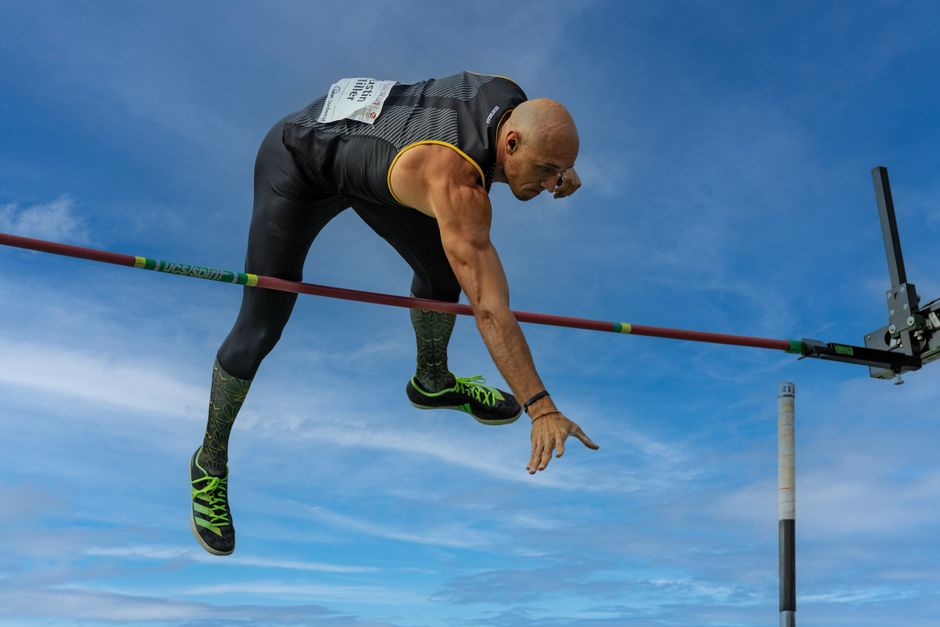
Of all the technical elements in pole vault, the approach and takeoff are where most performances are won or lost. A vaulter who arrives at the box with maximum controllable speed, an efficient pole carry, and a well-timed plant is set up for a successful vault. A vaulter who doesn’t rarely recovers from it, no matter how good their swing is.
This breakdown covers everything from your first stride off the line to the moment your feet leave the ground — with specific coaching cues you can take straight to the runway.
The Approach: 10 or 12 Strides
The approach run in pole vault uses either a 10-stride or 12-stride approach, starting from a standing position with no preliminary steps. The number of strides depends on the athlete’s speed, development stage, and what their coach has determined through takeoff testing.
The goal of the approach is simple: build to maximum controllable speed by the time you reach the box. Not just maximum speed — maximum controllable speed. Sprinting out of control through the plant zone causes every phase that follows to break down.
What “running tall” actually means
Throughout the entire approach, athletes should maintain an upright, forward posture with high hips. The first step off the line should be high and bounding, not long — think of it as loading energy rather than covering ground. From there, drive your knees high and keep your eyes forward on the box.
A common early error is looking down or dipping the shoulders as the pole begins to come down. Keep your eyes on the box throughout the entire approach.
The initial pole carry position
At the start of the approach, the pole is carried vertically, with the right hand at hip height and the left hand approximately 10cm in front of the left chest. This upright carry position maintains balance and allows a controlled, gradual lowering through the run.
Grip: Getting It Right Before You Run
Correct grip is established before the approach begins — not adjusted mid-run.
- Left hand: palm facing down
- Right hand: palm facing up, approximately 12 inches from the top of the pole
- Hand spacing: shoulder-width apart
- The red band on your pole marks the top of the recommended grip range — your grip should fall within 6 to 18 inches from the top of the pole
A reliable way to find your takeoff position: place the pole tip in the box while holding your grip, then position yourself so your right arm extends vertically above you and your left foot aligns directly below your right hand. That foot position is your takeoff mark.
The Transfer Phase: The Last 2–3 Strides
The transfer phase — the final two to three strides before the box — is where the vault either comes together or falls apart. This is when the pole transitions from carried to planted, and the timing has to be precise.
Here’s what should happen stride by stride:
Three strides out: The pole should be parallel to the ground at chest height. Your right hand is close to your armpit, left hand just in front of your chest, and your left hand stays above your left elbow.
Penultimate stride (second to last): Both arms move to forehead height together. This is a critical moment — both arms rising in sync drives the pole tip toward the box and sets up the plant.
Final stride (right foot contact): Before your right foot contacts the ground, your right arm should be at a 90-degree angle with your hand above and in front of your head. Your left arm is at a slightly greater angle, hand at eye height.
At right foot contact: both arms straighten simultaneously, and the right knee drives upward.
The Takeoff
The takeoff is the transition from sprint to vault. The objective is to carry as much forward speed as possible into the pole while achieving maximum extension.
As the coaching cue from brianmac.co.uk puts it: “You must take off with as much forward speed as possible, but your body must be as extended as possible so that the pole is as near to vertical as can be.”
Two key checkpoints at takeoff:
- Both arms should be straight, with the right arm directly overhead
- Your takeoff foot should be located directly beneath your top hand
The pole contacts the back and bottom of the box just before you leave the ground. At that moment, your body should be in a long, extended line — not bent at the hips, not leaning back, not collapsing forward.
The Most Common Errors (and What Causes Them)
Short, choppy final strides — usually caused by losing rhythm during the transfer phase. Focus on keeping the last three strides aggressive and rhythmic, not tentative.
Left arm locking during the flight phase — one of the most significant technique errors in pole vault. Deliberately locking or pushing with the left arm during the flight phase forces the chest backwards, disrupting the swing. The left arm should be strong but not rigid, with the left elbow slightly turned outward.
Eyes dropping off the box — causes the head and shoulders to drop, which collapses posture and kills approach speed in the final strides. Eyes stay on the box, always.
Takeoff foot too far forward — stepping past the point directly beneath your top hand means you’re “reaching” at takeoff, which flattens the pole angle and saps energy from the vault before it begins.
Applying This to Your Training
The approach and takeoff can be drilled without a full vault. A few effective training approaches:
- Mark your approach — measure and mark your takeoff point on the runway and drill consistency of hitting that mark at full speed
- Pole carry drills — run your full approach without planting, focusing entirely on the transfer phase timing
- Penultimate and final stride work — isolate the last three strides and walk through the arm sequence slowly before building to speed
For questions about which pole best supports your current approach speed and grip height, contact Coach Dopp — or browse our full selection of UST-ESSX, Gill Pacer, and FiberSport poles in the TetonVault shop. All three brands offer options suited to athletes at every stage of technical development, and Coach Dopp can help match you to the right pole for where you are right now.