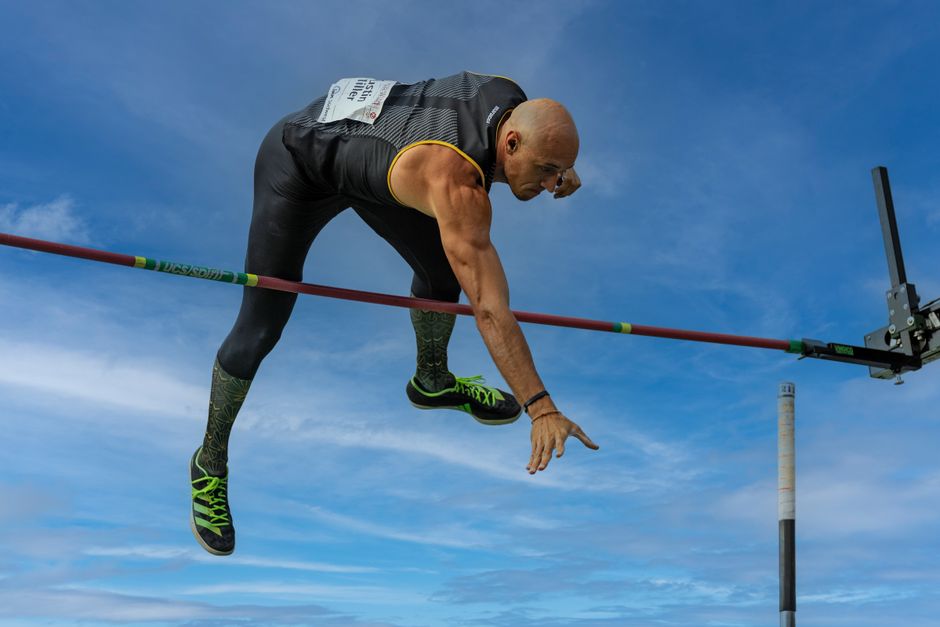
If you’ve ever watched a pole vault competition and thought wait, how does this actually work? — you’re not alone. Of all the events in track and field, pole vault has some of the most unique rules, the most dramatic moments, and honestly the steepest learning curve for first-time spectators. Let’s fix that.
Whether you’re a new athlete, a parent trying to keep up at meets, or just someone who wants to appreciate what they’re watching, here’s everything you need to know.
The Basic Idea
A pole vaulter sprints down a runway carrying a long, flexible pole, drives the tip into a recessed metal box at the base of the standards, and uses the pole’s bend and recoil to launch themselves up and over a horizontal bar. The pole itself is made of fiberglass or carbon fiber — materials chosen specifically for their ability to flex under load and spring back with energy.
The goal is simple: clear the bar without knocking it down. How high you can go is the question.
How a Competition Actually Runs
Here’s where it gets interesting. Pole vault isn’t a “one jump and you’re done” event — it’s a progressive competition where the bar keeps climbing. According to World Athletics, here’s how it works:
- Each athlete gets three attempts at every height. Miss all three at any height and your competition is over.
- The bar moves up incrementally after each round. Athletes who clear move on; those who don’t are eliminated.
- You can skip heights. This is a real strategy — some vaulters will pass on a lower bar to save energy for a height where they want to make their run.
- Three consecutive misses ends your day, regardless of whether those misses are all at the same height or spread across heights.
That last point is the one that catches people off guard. You can miss once at one height, clear it on your second attempt, then come back and miss twice more at the next height — and that’s three total misses in a row, ending your competition. Every attempt matters.
What Happens in a Tie
Ties in pole vault are broken by a specific set of criteria, and it’s worth knowing because close competitions come down to this all the time.
First, the athlete with fewer misses at the height where the tie occurred wins. If that’s still equal, it goes to fewest total misses across the entire competition. If it’s still tied after all that, a jump-off is held — each athlete gets one attempt at a decided height, and the bar moves up or down until someone clears and someone doesn’t.
It rewards consistency throughout the whole meet, not just one big clearance at the end.
A Quick History Lesson
Pole vault has been around a lot longer than most people realize. According to World Athletics, height-based competition dates back to Lancashire, England in 1843 — and the first recorded use of bamboo poles was in 1857. Athletes eventually moved through steel poles in the 1940s before fiberglass and carbon fiber became the standard from the late 1950s onward.
The women’s pole vault wasn’t added to the Olympics until the 2000 Sydney Games, where American Stacy Dragila won the inaugural gold medal. Today, the women’s world record stands at 5.06m, set by Yelena Isinbayeva in 2009. The men’s record belongs to Armand “Mondo” Duplantis of Sweden, who cleared 6.24m in 2024.
One Rule That Surprises Everyone
There’s a rule that’s been the subject of a lot of conversation in the pole vault community lately: the pole weight certification rule. In high school competition, athletes are required to use poles rated at or above their body weight — a rule designed with safety in mind. How that rule gets enforced varies widely by state, and it’s sparked real debate about athlete welfare and whether the current system actually makes competition safer.
It’s worth knowing about as a parent or athlete, especially at championship-level meets where certification checks happen before competition.
What Makes It Fun to Watch
Now that you know the rules, here’s what to actually look for:
- Watch the approach. Speed into the plant is everything — a vaulter sprinting full out is already doing something most people couldn’t replicate.
- Watch the bend. A good vault loads the pole dramatically — it’ll look like it might snap. It won’t.
- Watch the inversion. The moment where the athlete turns upside down and drives their feet over the bar is where the gymnastics kicks in.
- Watch the bar. A cleared bar that wobbles and settles back down after the athlete lands is one of the most satisfying moments in all of track and field.
Getting Started
If you’ve got an athlete getting into the sport — or you’re curious what equipment it actually takes — we carry poles from UST-ESSX, Gill Pacer, and FiberSport at TetonVault, along with pole bags, accessories, and everything else a new vaulter needs. Browse the shop or reach out to Coach Dopp if you want a hand figuring out where to start.
The bar’s set. Time to go over it.