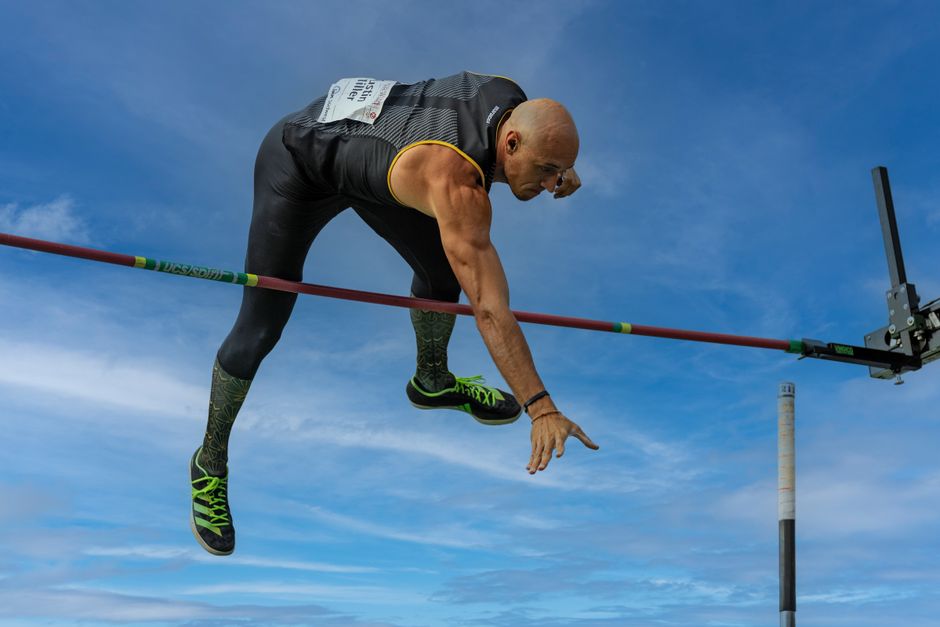
If you’ve ever watched Mondo Duplantis fly over a bar set higher than a two-story house and thought how on earth is that pole doing that, you’re asking the right question. The pole vault pole isn’t just equipment — it’s the single biggest reason heights have skyrocketed over the last century. The athletes have gotten faster and stronger, sure. But the pole is where the revolution really happened.
So let’s take a walk through history, from bamboo cuttings in 19th-century England to the carbon fiber-fiberglass hybrids in your shop today. By the end, you’ll know exactly why the pole on your shoulder is the most important piece of gear you’ll ever touch.
The Bamboo Era: When Vault Poles Were Literally Plants
The modern, height-based version of pole vault traces back to Lancashire, England in 1843, where the sport became formalized as a competitive event. According to World Athletics, the next big leap came in 1857, when bamboo became the dominant pole material.
Think about that for a second. For nearly a century, the world’s best vaulters were leaping into the air on a hollow plant stalk. Bamboo was light, surprisingly strong, and had a small amount of natural flex — exactly what early vaulters needed compared to the rigid wooden poles that came before.
Bamboo had its problems, though:
- It was unpredictable. Two poles from the same plant could behave totally differently
- It snapped. A lot. Often mid-vault.
- It couldn’t store much energy. The bend was minor compared to what came later.
Still, bamboo dominated the sport into the mid-20th century. Records were set on it. Olympic medals were won with it. And if you’ve ever picked up a bamboo stick at a hardware store and tested its springiness, you can sort of imagine what those early vaulters were working with.
The Steel and Aluminum Years: Stronger, but Stiff
In the 1940s, steel poles started replacing bamboo at the elite level, according to World Athletics’ history of the discipline. Aluminum followed. The advantages were obvious: metal poles were consistent, didn’t shatter, and could be manufactured to precise standards.
The catch? They barely bent. Steel and aluminum poles were essentially rigid levers. Vaulters used them to swing up and pivot over the bar more like an Olympic high jumper using a tool than the dynamic catapult-style vault we know today.
This is why men’s pole vault records during the steel era hovered in a relatively narrow band. There’s only so much height you can get from a rigid pole — you’re limited by your own speed, your jump, and how much you can muscle the takeoff. The pole wasn’t giving anything back. It was just a stick.
That all changed at the end of the decade that followed.
The Fiberglass Revolution: Late 1950s and Beyond
Here’s the moment that broke the sport wide open.
According to World Athletics, flexible fiberglass and carbon fiber poles took over from the late 1950s onward — and the difference was immediate and dramatic. Suddenly, the pole wasn’t just a stick. It was a spring. A vaulter could plant the tip, drive forward, and the pole would bend dramatically, storing huge amounts of energy from the approach run. Then, as the vaulter swung up and inverted, the pole would recoil — launching them skyward like nothing before had.
The records started climbing. Fast. And they haven’t really stopped:
- Mondo Duplantis (Sweden) holds the current men’s world record at 6.24 meters, set in 2024 — that’s over 20 feet in the air (per World Athletics).
- Yelena Isinbayeva (Russia) holds the women’s world record at 5.06 meters, set back in 2009 — still standing more than 15 years later (per World Athletics).
Neither of those heights is remotely possible with a bamboo pole. The composite pole is the reason the modern sport exists.
What Modern Poles Are Actually Made Of
Today’s poles are precision-engineered athletic instruments. They look simple from the outside, but inside they’re carefully layered composites of fiberglass and carbon fiber, each tuned to deliver a specific bend, recoil speed, and feel.
The three brands we stock at TetonVault — UST-ESSX, Gill Pacer, and FiberSport — each take a slightly different approach, and all three are trusted at high school, collegiate, and elite levels:
| Brand | What Makes It Special |
|---|---|
| UST-ESSX | Industry-leading legacy with the ESSX Launch (entry-level) and ESSX Recoil (advanced) lines |
| Gill Pacer | Iconic Pacer One, PacerFXV, and Pacer Composite — workhorses of high school programs |
| FiberSport | Carbon/fiberglass hybrid construction, pre-bent curvature, and a Compaction System that eliminates air voids for consistent performance (per fibersportusa.com) |
That last point on FiberSport — no air voids — is a big deal. Tiny inconsistencies in pole construction can cause inconsistent bending and, worst case, premature breakage. Modern manufacturing is light-years ahead of where it was even 30 years ago.
Why This Matters for You
Cool history lesson, you might be thinking. But what does this actually mean for the vaulter on the runway today?
Three big things:
1. You’re holding more pole than you realize. Every time you grab a modern composite pole, you’re holding the result of decades of materials science. Treat it well. Store it properly. Don’t let it bake in a hot car or get tossed around in a truck bed.
2. The right pole is everything. Because composite poles store and release energy based on the vaulter’s weight, speed, and grip height, matching the pole to the athlete is critical. A pole rated for 130 lbs isn’t going to work the same way for a 170-lb vaulter — and vice versa. This is exactly why pole weight ratings exist, and why coaches obsess over them.
3. There’s no “best” brand — there’s the best brand for you. UST-ESSX, Gill Pacer, and FiberSport all build excellent poles. The differences come down to feel, flex characteristics, and what your coach and your body respond to. The only way to know is to try.
Today’s Pole Lineup at TetonVault
If you’re ready to upgrade or buy your first competition pole, here’s a snapshot of what’s available:
- UST-ESSX Launch — solid entry-level competition pole, available in multiple lengths
- UST-ESSX Recoil — advanced composite, used by collegiate and elite vaulters
- Gill Pacer One — the high school standard, available across the full weight/length range
- Gill PacerFXV — step-up Pacer with finer weight increments
- Gill Pacer Composite — flagship Pacer for serious competitors
- FiberSport Carbon and Non-Carbon Training Poles — engineered for vaulters at every level, from beginner to collegiate
You can browse the full lineup at our pole vault shop, and if you’re not sure which pole fits your body weight, grip height, and skill level, reach out to Coach Dopp directly. He coaches pole vault for a living and will walk you through the decision — no pressure, no upsell, just the right pole for your situation.
The Sport Keeps Evolving
Here’s the wild thing: pole technology is still improving. New layups, new resins, new hybrid constructions keep coming. The 6.24m world record probably won’t stand forever — and when it falls, you can bet a slightly better pole will be part of the reason.
That’s what makes pole vault unique. It’s the rare track event where the athlete and the equipment are inseparable. Other events come down to legs and lungs. Pole vault comes down to legs, lungs, and the spring you’re holding in your hands.
So next time you walk down a runway with a modern composite pole on your shoulder, remember: you’re holding the end-product of nearly two centuries of trial and error. Bamboo. Steel. Aluminum. Fiberglass. Carbon. Each one moved the bar a little higher.
What you do with it next is up to you.
Ready to find the pole that’s right for you? Browse our full selection of UST-ESSX, Gill Pacer, and FiberSport poles, or contact Coach Dopp for personalized fitting advice. Idaho Falls vaulters — Coach Dopp coaches locally and can help in person.