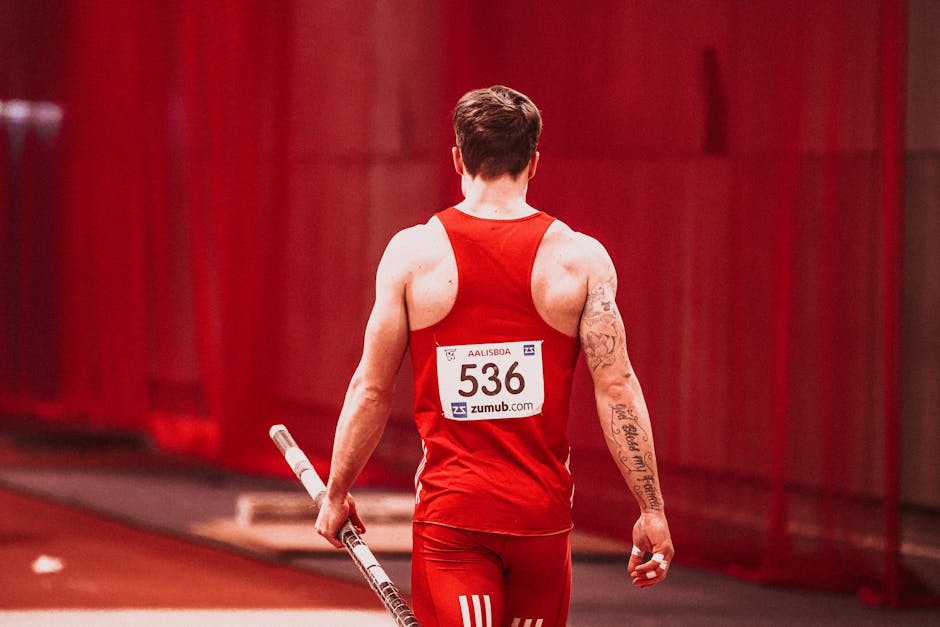
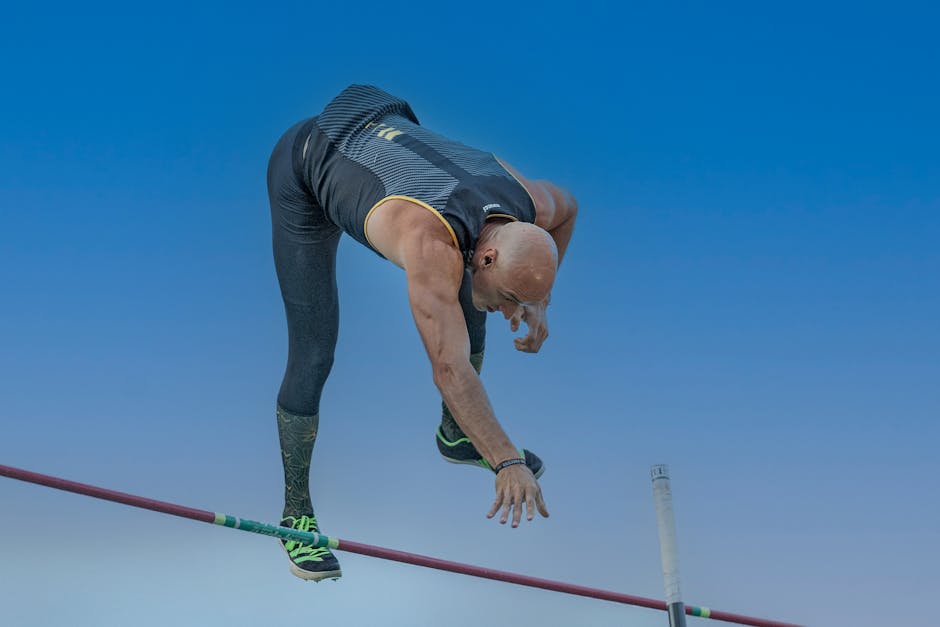
People see a pole vaulter clear 15 feet and think: wow, that takes serious leg power. And sure — your sprint and your takeoff leg matter a lot. But ask any experienced coach what separates the athletes who plateau from the ones who keep climbing, and you’ll hear the same answer over and over: upper body strength.
The pole doesn’t bend itself. You don’t invert by accident. Every inch you gain above the crossbar is earned with your hands, arms, shoulders, and core working together in a fast, explosive sequence. If those muscles are weak or underdeveloped, technique can only take you so far.
Let’s break down why upper body strength matters, which muscles do the heavy lifting, and how to train them.
Why Your Arms Are the Engine of the Vault
The swing-up phase of a pole vault requires athletes to push their arms back while leading with their chest, swinging their legs upward until parallel with the floor. Then comes the extension — thrusting hips forward, straightening legs, and driving feet above the head. Neither of those phases happens without the arms fighting against the pole at exactly the right moment.
During the swing and extension, you’re essentially performing an explosive, moving pull-up — hanging from a pole that’s bending and unloading energy, while your whole body fights to get vertical.
Then there’s the grip itself. Proper hand position at plant calls for one hand at the hip and the other roughly 10cm in front of the chest, above elbow height. That starting position alone demands real shoulder stability and grip endurance — and you’re holding it through 15+ strides of sprinting before the plant even happens.
The takeaway? If your arms tire out before the pole does, you lose.
The Muscles That Matter Most
Here’s a quick rundown of the upper body muscle groups pole vaulters rely on most:
- Grip and forearms — You’re controlling a 12–16 foot fiberglass pole at sprint speed. Grip strength is non-negotiable.
- Shoulders (deltoids, rotator cuff) — The plant and drive overhead demand explosive shoulder power and stability throughout.
- Lats (latissimus dorsi) — These are your “pull” muscles. They help you drive the pole forward and maintain your position through the swing phase.
- Triceps and chest — During the push-off at the top of the vault, you push away from the pole. Tricep and chest strength determines how cleanly you release.
- Core — Not technically upper body, but your core connects everything. Coach and competitive vaulter Karlie Place says it plainly: core strength is critical for inverting. Without it, the kinetic chain from your grip to your hips breaks down entirely.
Two Drills That Build Vault-Specific Strength
General gym work helps, but nothing beats drills that train the exact positions and movements you use in competition. Here are two highly effective ones:
The Partner Plant Drill
This drill uses an above-weight-class pole — intentionally heavier than what you compete on — with a coach standing behind to stabilize your back. You hold your takeoff position and focus entirely on the explosive upward punch motion that happens at the plant.
The extra resistance forces your shoulders, arms, and core to work harder than normal, which makes your actual competition pole feel lighter and more responsive on meet day. The “PUNCH THE SKY” cue is a classic coaching reminder here — your top hand drives upward aggressively, not passively.
The Jagodin Drill
In the Jagodin drill, athletes hold the plant position throughout the entire movement without swinging through. The focus is completely on pole-bending strength and staying locked into a stable, powerful plant position.
This drill is especially valuable as a warm-up on competition days — it activates exactly the muscles you’ll need, in exactly the positions you’ll use, without wearing you out before the bar goes up. Keep it in your warm-up rotation year-round.
Building Strength in the Weight Room
If you’re not lifting, you’re leaving height on the table. Lifting is essential — and it’s one of the most commonly neglected parts of a beginning vaulter’s training. The recommendation from experienced coaches is consistent: heavy lifting in the offseason, with coach-programmed maintenance work during competition season to stay strong without accumulating excess fatigue.
For pole vaulters, these movements deliver the most carry-over:
- Pull-ups and weighted pull-ups — Directly trains the lat strength you use in the swing phase
- Dips and close-grip bench press — Builds tricep strength for the push-off
- Overhead press — Develops the shoulder stability and pushing power you need at the top
- Dead hangs and grip training — Builds the forearm endurance to hold on through a full vault
- Plank variations and hollow body holds — Core stability that keeps your inversion clean
The key is consistency over intensity. A steady, well-structured lifting routine beats sporadic heavy sessions every time — especially for high school athletes balancing school, practice, and competition.
The Right Pole Makes Training More Effective
Here’s something coaches don’t always emphasize enough: having a pole matched to your current strength level actually accelerates your development. A pole that’s too stiff for where you are right now teaches bad habits — you’ll compensate with your legs and timing instead of learning to drive through your arms and core the way the event demands.
At TetonVault, we carry poles from UST-ESSX, Gill Pacer, and FiberSport — three of the most trusted names in the sport — for athletes at every stage of development:
For beginning vaulters building that base of upper body strength:
- ESSX Launch — Starting at $378, lightweight fiberglass with a forgiving bend profile designed for developing technique
- Gill Pacer One — Starting at $405, with a “slowed” bend that gives athletes more time to rotate into vertical position
- FiberSport Non-Carbon Training Poles — Starting at $435, built tough for high-repetition training environments
For intermediate and advancing vaulters who’ve put in the gym work:
- ESSX Recoil Advanced — From $599, the pole trusted by Olympic and World Champions with Recoil Advanced technology
- Gill PacerFXV — From $587, S-Fiberglass construction with consistent flex response across the entire Pacer series
- FiberSport Carbon — From $655, Easy Bend carbon technology for a natural, forgiving vault at the intermediate and advanced levels
Not sure which pole fits where you are right now? That’s exactly what Coach Dopp is here for. Reach out and we’ll match you to the right pole for your strength level, grip height, and goals.
Put In the Work, Then Trust the Pole
Upper body strength in pole vault isn’t about being the biggest person in the weight room. It’s about building targeted, functional strength — the kind that shows up in the vault box when everything is moving fast.
Add the partner plant drill and Jagodin drill to your regular practice. Get consistent in the weight room, especially in the offseason. And make sure your pole is set up to reward your development, not fight it.
When all three click together, that crossbar starts moving up.
Shop poles at TetonVault or contact Coach Dopp to get started on your next PR.