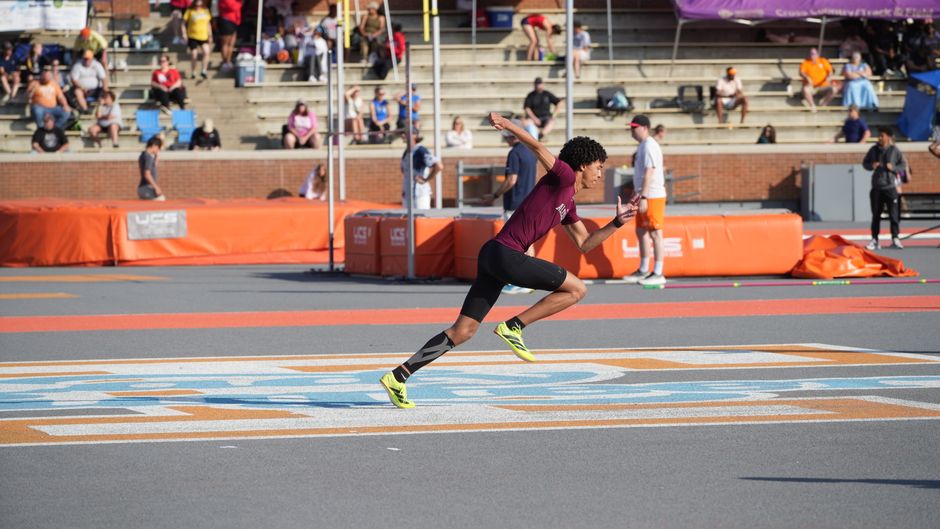
Here’s a question that trips up a lot of new pole vaulters: if you want to jump higher, what should you spend most of your training time on? The instinctive answer is “more jumps.” It feels right. More reps, more clearances, more bar height. But ask any experienced coach — including the ones whose athletes are clearing big bars year after year — and the answer is almost always different. The truth is that what you do on the days you’re not vaulting is what builds the athlete who can clear those bigger bars when meet day comes around.
That’s where cross-training comes in. Pole vault is a sprint-and-power event built on top of a gymnastic skill. The vaulters who jump highest are almost never the ones who only practice the vault — they’re the ones who train like sprinters, lift like throwers, and move like gymnasts. Let’s break down what smart cross-training actually looks like for a high school or club vaulter.
Why Cross-Training Matters in Pole Vault
The website Learn To Pole Vault puts the physics simply: runway length matters most during competition because “you are trying to reach your maximum velocity at launch.” Translation — the faster you arrive at the box, the more energy you can put into the pole, and the higher the pole will throw you.
That single fact reshapes how you should train. Pole vault isn’t really an arm event or a “trick” event. It’s a horizontal-velocity event with an inversion bolted on. Coach Karlie Place, whose beginner pole vault guide is one of the most-read intros in the sport, says it directly: “The faster you are on the runway, the higher you will jump.” And Team Hoot, which sells one of the most popular pole vault training systems on the market, leads its homepage with this line: “The easiest way to vault higher is by getting faster.”
So if speed is king, cross-training is how you build it. You don’t get faster by vaulting more — you get faster by sprinting, lifting, and conditioning the body to produce more force in less time.
The Three Pillars of Pole Vault Cross-Training
Place’s beginner framework boils pole vault preparation down to three training pillars. Every cross-training plan we’d recommend at TetonVault hits these three:
| Pillar | What it builds | Why it matters |
|---|---|---|
| Sprint form | Top-end speed and acceleration | More runway velocity = more pole bend = higher grip = higher bar |
| Lift | Posterior-chain power, structural strength | Generates explosive takeoff and protects the body from repeated landings |
| Core | Trunk control during inversion | Lets you finish the swing, drive the hips up, and turn cleanly over the bar |
Notice what’s not on that list: more vault reps. Place herself wrote about lifting that “this is the one I wish someone would have stressed to me as a high schooler.” The pillars are the foundation. The vault is what you build on top.
Pillar 1 — Sprint Form
This is the one most high school vaulters under-train. Place’s advice is direct: practice your sprint mechanics without the pole first, then add the pole back in. Body position, posture, knee drive, and a relaxed upper body all transfer directly to the runway. If your sprint form falls apart at top speed, your run-up will too.
A great progression: include short sprint sessions in your weekly training (separate from vault days), film yourself from the side, and compare your form to a clean sprinter’s. Ask your team’s sprint coach to watch you run. They’ll catch things your vault coach is too busy watching your top arm to notice.
Pillar 2 — Lift
Heavy compound lifts in the offseason are non-negotiable. Place specifically recommends lifting heavy in the offseason to build muscle, then transitioning to coach-directed programs once competition season hits. The goal isn’t a powerlifting total — it’s general athletic strength and resilience.
Team Hoot’s structured training plans confirm the same approach, referencing “general strength circuits” and “plyometric circuits” as core components of preseason programming. You can also see how we sequence the year over on our pole vault periodization season plan post.
Pillar 3 — Core
“One word: core.” That’s Place’s whole recommendation for the third pillar, and she’s not exaggerating. The reason is mechanical — once you leave the ground, the only thing connecting your run-up energy to bar clearance is your ability to invert. That inversion is a core-driven move. We dug deeper into specific exercises in our core training for pole vaulters post, but the short version is: train the trunk hard, train it often, and train it in positions that mimic the swing (hanging leg raises, hollow holds, weighted carries).
The Hidden Fourth Pillar: Gymnastic Body Awareness
Here’s one Place mentions almost in passing, but it’s gold. She credits her gymnastics background with developing the body awareness that made pole vault click for her. That’s not unusual — a huge percentage of elite vaulters started as gymnasts.
You don’t need to be doing back handsprings to benefit. Even basic gymnastic work — handstands against a wall, rope climbs, hollow holds, parallette dips, simple tumbling — pays massive dividends in your ability to control your body in the air. If your high school has a gymnastics program (or a club nearby), one session a week of supplementary gymnastic strength work can transform your vault.
Plyometrics: The Bridge Between Strength and Speed
The fastest, highest-jumping vaulters live in the world of plyometrics — bounds, hurdle hops, box jumps, broad jumps. Team Hoot includes plyometric circuits as part of their structured training. Plyos teach the muscles and tendons to produce force fast, which is exactly what you need at takeoff. We covered programming and progressions in our plyometrics for pole vault post — start with low-intensity bounds before adding height or volume.
How to Actually Fit This Into a Week
You don’t need eight workouts a week to train all of this. A simple in-season template might look like:
- Monday — Sprints + light lift
- Tuesday — Vault practice (technical focus)
- Wednesday — Heavy lift + core
- Thursday — Vault practice (full runway)
- Friday — Plyometrics + mobility
- Saturday — Meet or simulated competition
- Sunday — Active recovery / gymnastic work
That’s the rhythm: two vault days, two strength days, one speed day, one plyo day, one easy day. Adjust to your meet schedule and your athlete’s training age.
The TetonVault Bottom Line
Cross-training isn’t a side project — it’s the work that makes your vaulting work. The athletes who clear the biggest bars are the ones who sprint, lift, condition, and train body control year-round. The vault is the test. The cross-training is the preparation.
If you’re putting together a new program at your school, or your athlete is ready to take their training seriously, we’re happy to help. TetonVault stocks competition-grade poles from UST-ESSX, Gill Pacer, and FiberSport — three of the most trusted manufacturers in the sport — plus accessories, bags, and apparel to outfit your whole program. Head over to the shop to browse, or reach out to Coach Dopp if you’d like coaching guidance, pole recommendations, or help building a season plan from scratch.
Train the athlete. The vault will follow.